
Did you know cattle farming is one of the top-three environmental problems, according to the UN’s Food and Agriculture Organization, causing 18% of greenhouse gas emissions? Me neither. So next time you slide through an almost-live fillet, have a think about the Argentine organic food options available to you before swallowing.
Although the average steak is practically organic in Argentina, given that cows regurgitate pasture instead of being fattened up via feedlots, organic farming is not legally recognised and producers pay for a certified stamp.
However, that doesn’t mean an Argentinian organic food movement is non-existent – far from it. Although the differences between natural, live and organic foods are not always clear due to people’s unfamiliarity with the concepts, rest assured that cafés, restaurants, markets and shops using these terms are trying to educate the pizza-and empanada-eating brigade to show that organic Argentine food exists, even if it isn’t stamped.
In Buenos Aires, pick up the Urbana & Orgánica map. I found mine at the cutely ramshackle veggie café Masamadre. Including information on organic food stores, eateries, Reiki teachers and more, this fold-put map is an essential guide to sustainable living in the capital, also listing 20-plus organic food delivery firms.
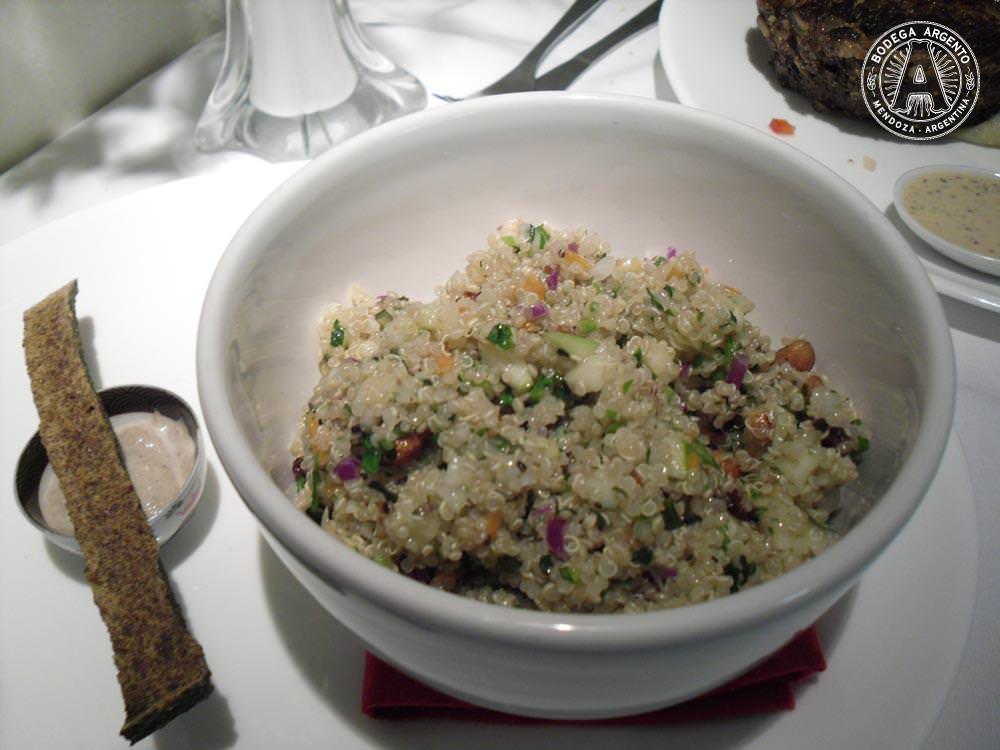
Quinoa Risotto at Kensho – Photograph by Sorrel Moseley-Williams
Dine Fine
For organasmic eating, Kensho is one of few organic restaurants. Originally a puerta cerrada, chef Máximo Cabrera, who also teaches cooking classes at the eatery’s kitchen, conjures up vegetarian, vegan and macrobiotic delicacies – all marked up on the menu – such as a perfectly picante three-mushroom ceviche starter and whopping great veggie burgers in a very zen dining space. Why not try the tasting menu for a real organic buzz? Making a conscientious effort to serve raw foods, even the almonds in my quinoa risotto had been activated. And don’t let it be said that vegans don’t have a sense of humour because you should get up, then get down the James Brownie for dessert.
A chip off the old organic block is Bio. Set up 10 years ago, owners Claudia Carrara and Marisa Ledesma’s vegetarian menu includes soup, pizza, burgers, and a spot-hitting Bahiana-style mushroom curry slathered in coconut milk and chilli. If beetroot and oranges in one glass are your bag, create your own juice – provided they are in season. Café-style Bio also stocks organic produce such as jams, fresh bread, pasta, tea and yerba maté, and of course, dulce de leche.
Veggie Burger at Bio – Photograph by Sorrel Moseley-Williams
Although GreenEat doesn’t classify itself as organic due to the legal grey area, its sandwiches, salads and sweet treats are preservative- and additive-free. A perfect, tranquil spot to escape the Microcentro mayhem, there’s no skimping on the smoked salmon and alfalfa in the enormous bagels, the Caesar salad is abundant and as everything is bought and made that day, whatever is left over is given to charity. Conscientious gorging. I love it.
Shopping
One of the busiest shops in Chinatown is Casa China on Arribeños 2193, a one-stop store for all your organic needs. Known for selling ready-to-slice sushi rolls, Casa China also stocks organic beauty products, fresh ‘n shiny fruit ‘n veg and bread sticks, among others. I couldn’t get enough of the carob and orange brownie. As a random aside, you can also buy lychee juice and tiger balm.
Another pioneer in the market, Esquina de las Flores has most angles covered. Its self-branded products, from oats to sun-dried raisins, are available in most health food shops, and its Palermo Soho store includes an extensive restaurant complete with water feature. They also offer cookery classes and plenty of meals from the menu can be taken away.
Pasta Lunch at El Galpón – Photograph by Sorrel Moseley-Williams
For a more boho organic shopping experience, head to Chacarita’s El Galpón. This indoor market complete with organic parrilla, café and vegetable garden blooming next to the disused railway line opens Wednesdays and Saturdays and recently started a delivery service. Highlights include milk squeezed at 3am that day, organic meat and eggs, Colombian coffee, herbs and of course wine. Although it’s not as crowded as it used to be, that’s because several producers have moved to the Ecofería de Consumo Consciente, which open Fridays and Saturdays. Another popular indoor market is Mercado Bonpland, which sells delectable wholemeal veggie empanadas, regional goodies and clothes made from organic cotton among other items.
Further afield in the northern suburbs of Greater Buenos Aires, check out organic markets in San Isidro and San Fernando, respectively found at Márquez 3055 and the Tren de la Costa train station.
Tea Time
Tea Connection, from the same Argentine team that runs GreenEat, has the same idea as its newer cafés. Loose teas are organic, and all cakes and bread baked on the premises are free of artificial tat. Although the organic and macrobiotic La Casa de Ohsawa opens until 10pm, pop by for some green tea and slice of cake. This converted house is also a bakery and fruit ‘n veg store and the mix of staff, from elderly ladies to dreadlocked young men, prove the organic movement is well activated in Belgrano. Natural Deli bakes a tasty muffin, and given that around 40% of all ingredients are organic, you can be sure your eating experience is what it should be.
In warmer weather, a freshly made smoothie may be more tempting than a coffee, and the original juice maker in town is Pura Vida. Slurp down a Pura Energía – banana, coconut, pineapple and carrot – made by the people who introduced wheatgrass to Argentina. Meanwhile, B-Blue Deli is a Palermo option, and with all its blueberries grown on the owner’s estate in Corrientes, what isn’t exported ends up in your smoothie.
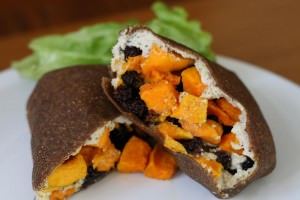
Butternut Squash Wrap at Cocina Verde – Photograph courtesy of Cocina Verde
Best of the Rest
Although an establishment is unlikely to be certified organic, many are contributing how they can. HG Restaurant sources miniature organic vegetables and edible flowers from a single provider, while 0800 VINO delivers Colome, organic wine from Salta, to your door. If you can’t bring yourself to leave the house, check out food box deliveries by Tallo Verde, while Cocina Verde prepares vegan and raw-live food meals with organic staples such as grains, rice and beans. You can even order in a week’s worth of supplies, substituting laziness for carbon footprint reduction.
Got any top organic tips I might have missed? Leave a comment below.


Latest posts by Sorrel Moseley-Williams (see all)
- AND THE BEST SOMMELIER IN ARGENTINA IS… - December 12, 2017
- CUATRO ESQUINAS: FOUR CLASSIC CORNER RESTAURANTS IN BUENOS AIRES - March 28, 2017
- Romance in Argentina: Dating Tips and Advice - February 10, 2017
 12 FRESH ORGANIC OPTIONS IN BUENOS AIRES
  The Best Food Fairs and Farmers Markets in Buenos Aires
  WHERE TO EAT VEGAN FOOD IN BUENOS AIRES
  The Best Places for Brunch in Buenos Aires
  WHAT’S THE BEEF? OUR INSIDER’S GUIDE ON THE BEST CUTS TO ORDER AND WHERE IN BUENOS AIRES
  Meat & Greet the Best Steak Restaurants in Buenos Aires
  BUENOS AIRES HOTELS FOR FOOD AND WINE LOVERS
  COSTA RICA: THE FOODIEST STREET IN BUENOS AIRES
  WHERE TO GO GLUTEN FREE IN BUENOS AIRES
  A Vegetarian’s Guide to Buenos Aires
  Buenos Aires Restaurants and Bars – The Best Places to Eat and Drink
  The Foodie Shopping Guide to Buenos Aires
El Rincon Organico – http://www.elrinconorganico.co… – which has delivery service, a grocery, and a cafe.
Buenos Aires Verde – http://www.bsasverde.com/ – restaurant
are among favorites….
Great, Dan, thanks for the recommendations!
Great piece. I like Dan's extra recommendation – Buenos Aires Verde – too. In fact, I think it has an edge over Bio, although it lacks a bit of atmos because it doesn't draw the same crowds.
Haven't been to Masamadre for a long, long time. Should I revisit?
Hi Sorrel, A really great french spot called A Nos Amours, serves excellent food, all organic, even the wine. They don't advertise that their food is organic but after speaking to the owners, he buys everything from the Palermo and Chacarita organic market everyday.
Gracias, Christina — that's a great tip!
Not forgetting Abuela Pan in San Telmo: http://www.abuelapan.com – They use certified organic soybean and whole wheat flour with no
additives in their hand-kneaded bread, they don't use any canned
products or chemical preservatives and they don't fry their food. They
also use the “Niyuke” technique and either steam or oven-cook all their
dishes.
Awesome to know. Liking the sound of that Niyuke technique! Thanks KT!
Let's go, Christina! Thanks for that… besos!
Cheers DP. I never got to BSAs Verde in the end, and yet I went past it on the bus just last week. So many places, so little time…
I only had a coffee at MM, but there was a really nice vibe to the place, friendly staff and I would go back to try the food….
Quick FYI. About to tuck into a 2006 Cab Sauv from the Animal vineyards managed by Ernesto Catena. An organic winery.
[…] For the rest of this story, please go to The Real Argentina. […]
[…] service. Packages are shipped every Tuesday, Wednesday, and Thursday. Written by Mindy_Schwartz by phossil Finding Organic Food Online Finding organic food delivery online can be as easy as a few…ivery online can be as easy as a few clicks of the mouse. These green websites offer […]
dont forget about Jardin Organico delivery service, www.jardinorganico.com.ar, they have the largest assortment of organic certified products!!
Fantastic – thanks for the recommendation!
[…] Keep these tips for eating a healthy diet in mind when you go shopping or order out at a restaurant.If you choose to eat organic foods, you will be able to ensure a healthy and natural diet, that will…o help you achieve your goal of weight loss. It is one thing to lose weight by keeping track of your […]
Thank you SO much for this list. I arrived today and my head is spinning and finding places like this really help me to ground myself here! I’m checking them out tomorrow. Thank you for taking the time to write this brilliant article! xx